
Football Lightning Delays Have Bama Fans’ Attention
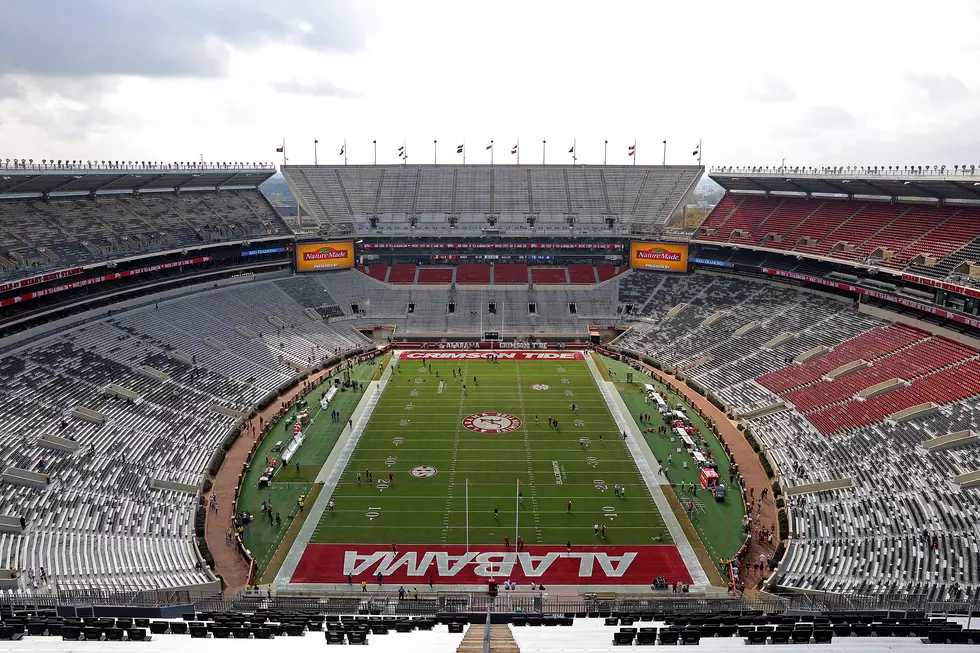
Two lightning delays at the Bama/Florida State game Saturday have Bama fans talking. We won the game, of course… after what felt like 16 innings. It even got dark enough that they turned on the lights at Bryant-Denny before the final whistle.

There seems to be lots of anger and misunderstanding about lightning delays at college football games. Check out social media. Especially after attending Bama fans missed a Million Dollar Band halftime show. Has that ever happened before due to a weather delay?
So I asked James Spann, the weather authority, to share his thoughts. Here’s what Spann says…
“There has been much weeping and gnashing of teeth after a series of lightning delays at college football stadiums yesterday, including Bryant-Denny Stadium in Tuscaloosa.
I have done weather support at UA home games for a long time. I support the coaching staff/athletic department and CTSM (Crimson Tide Sports Marketing). I am at every home game.
However, I am not involved in the decision to call a lightning delay; that is done by an emergency management team that includes at least one NWS meteorologist. They simply use rules dictated by the SEC.
The specific 8-mile radius threshold used by the SEC and the NCAA was officially adopted and expanded from an older standard in the spring of 2014.”
A few notes...
*Lightning does not just fall straight down from the center of a thunderstorm; it can travel horizontally for miles. It is well-documented that lightning can strike up to 10 miles away from the main storm cell, often striking under a seemingly clear sky.
*Importantly, the 8-mile figure isn't a magical scientific cutoff where lightning suddenly becomes dangerous. It's an operational safety threshold designed to provide a reasonable margin for error and storm movement.
*Sixteen people have been killed by lightning in the U.S. so far this year. The latest was a 19-year-old man who was killed Friday morning (two days ago) near the summit of Mount Timpanogos in the American Fork region of Utah. He was among a group of hikers who were sheltering from the storm in a small structure. Multiple other hikers were reportedly injured.
*A lightning strike in a crowded stadium can produce fatalities and dozens of injuries within roughly 50 feet of the strike point, with injuries occasionally occurring about 100 feet away. Ground current, side flashes, and contact with metal structures such as railings and bleachers can spread the electrical effects beyond the person or object initially struck.
“ I fully support the 8-mile rule; it is the right thing to do. The only weather element that frightens me is lightning; one routine (non-severe) storm can pack hundreds of ground strokes. And it doesn't have to be raining to be hit.
There have been too many lightning deaths in Alabama. One I will never forget is when 12-year-old Megan Nickell of Little Rock was killed at Gulf Shores in 2015. She was playing volleyball with several other friends when lightning struck (it wasn't raining). After she was hit, she was knocked unconscious, wasn't breathing, and had no pulse. She was rushed to Sacred Heart Hospital, where she passed away.
I will say the second delay in Tuscaloosa yesterday (near the end of the first half) was somewhat questionable. Yes, there was technically one lightning strike within 8 miles of the stadium, but it was a rapidly dissipating storm near Brookwood. I believe there needs to be a little “wiggle room” in situations like this so the game won’t be delayed unnecessarily.
But always remember lightning is frightening, and we have to learn to respect it. Even if it means stopping a football game for a while.
The cussing and fussing on social media won't stop us from doing the right thing to keep people safe.”
Thank you, James Spann.
I agree with Spann. While inconvenient for everybody, it’s safety first.
Top Stories from the Tuscaloosa Thread (9/7 - 9/14)
Gallery Credit: (Stephen Dethrage | Tuscaloosa Thread)
More From 95.3 The Bear